Issue 173
T R U M S P E C T R U M S P E C T R U M
I K E R U D D B I L L P U T T . C O MM M
I K E R U D D B I L L P U T T . C O MM
M I K E R U D D B I L L P U T T . C O MM
M I K E R U D D





home
bloody newsletter*
#173
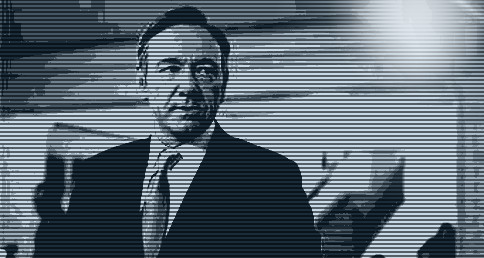
Kevin Spacey wonders what on earth he’s doing in a blog
in the distant antipodes..
night Maria and I joined my brother Richard (the Dick
of Dick’s Toolbox) and his wife Mary for
a meal at Trotters (or Twatters as Dick calls it) in Lygon
St Carlton before adjourning to the Nova Cinema a few
metres up the road and finding our way via the dimly lit
purple corridors to cinema No. 13 where we settled into
our well-worn arm chairs (or excitingly armless chairs
in Maria’s and my case) to watch Back to Burgundy,
a French film for which I’d seen a review by none
other than David Stratton in The Weekend Australian a
few days before in Flinders. (Congratters Mike –
that’s the longest opening sentence yet!)
David had recommended the movie to anyone interested in
wine-making and Richard definitely fits that description
being considered the wine buff of the family, with a gratifyingly
large (and painstakingly enumerated on yer obligatory
spreadsheet) collection of wines featuring some vintages
going back to the ‘90s and earlier. I have confined
my uninformed critical observations of wine to the Pinot
Noir variety and can claim to identify a good one to my
own satisfaction (without taking the trouble to remember
what it is). There was no choice of Pinot Noir in the
‘glass of’ selection at Twatters and so I
had what was on offer, which was Jack & Jill from
Scotchmans Hill, which Richard described from previous
experience as ‘inoffensive’, but which I found
to be so devoid of character I would add ‘inconsequential’
to the description.
Anyway, Back to Burgundy was an absolutely charming
movie, not least I suppose because it was devoid of any
special effects, visually or aurally. It was simply très
charmant. Loosely based on my favourite parable (the
Bible could well be reduced to this one parable in my
opinion) of The Prodigal Son, it explores the daily grind
of a family producing organic wines in Bourgogne with
the overlay of an existential family crisis, all filmed
with the lightest of touches by director Cédric
Klapisch. It’s probably symptomatic of my age, but
I was in tears at several key moments – and I wasn’t
alone from subsequent reports.
One of the surprising tear-inducing scenes was the party.
I got a T-shirt from Aunty Margaret for my birthday with
‘Party Animal’ inscribed on it. I don’t
know if there was irony intended, but I’m probably
the least party-inclined human imaginable. This is partly
due to my parents being very party oriented in my early
teens. Coming into contact with drunken revellers in that
context when you’re young and sober, (compounded
by my taking The Pledge courtesy of the local Presbyterian
Sunday School), is prone to fill you with dread and disgust,
but generally the parties I have attended in the dominions
have been dull affairs, even dull to turgid for the most
part. (The fault could be all mine, of course).
This Burgundy movie party however is uplifting and filled
with.. read
more
Toolbox –
Navigation
Once
upon a time where we were geographically positioned on
or above the surface of the globe was something of a problem.
Where anything was, including the ship or shaky canvas
and wood aircraft that we were in, was a problem defined
with very little precision. The insoluble perplexity of
insufficient data and tools were characterised by the
lament “Where are the stars and planets, where is
my compass or sextant!” This often ended when the
craft ran into a mountain or into an unknown landmass
on a dark and stormy night. Dead reckoning navigation
was aptly named.
We often forget that Columbus was sailing for China when
the Americas got in the way. Lindbergh used just a compass,
hopefully sufficient fuel, and the fact that Europe was
conveniently large on his solo transatlantic flight. And
he was also rather lucky, for a person who had no serious
navigational training, that the pressure distribution
over the Atlantic on the two days of the flight was such
that the net wind drift was zero—“the first
time such unusual weather conditions have been recorded
by weather experts.”
The concept of locational precision is actually quite
recent and built on large amounts of pain and suffering.
Sir George Everest the British geographer and surveyor,
after whom the mountain was named (its original name was
Peak ‘B’) surveyed a large part of India which
necessitated carrying five hundred kilogram theodolites
and a large measurement chain through the jungles, plains,
valleys and mountains. Everest (pronounced Eev –rist)
never saw the mountain and opposed it being called after
him saying that it could not be written in Hindi or pronounced
easily. Owing to Nepal and Tibet’s exclusion of
foreigner the search for local names was hampered. However
the Tibetan name Chomolungma (Holy Mother) appeared on
a 1733 map published in Paris by the French geographer
D’Anville but that was French at what did they know? The
Nepalese know it as Sagarmatha though this was coined
in the early 1960s.
Nowadays with various GPS (Global Positioning Systems)
we can get from A to B with remarkable precision – at
least whilst the power flows or the battery has a charge.
If you had to say what was one of the useful inventions
of the twentieth century this would have to be close to
the top. How else could we confidently drive into rivers
in Scotland and cul de sacs in Spain without
in-car navigation? How else could we drop high explosive
ordinance down the chimney of a remote Afghan settlement
or land at the right airport?
Yes I know that in the early days of the cold war the
Americans claimed to be able to drop a bomb from a Flying
Fortress into a bucket from 50,000 feet but in fact, before
GPS they were lucky to be in the right country. And when
the developers of the V2 rocket wondered where the safest
place to observe its landing might be they decided that
the bunker should.. read
more
Trans-Tasman Tales – Wild Boars and Seals – Chaos and
Complexity
“Chaos theory
seeks an understanding of simple systems that may change in
a sudden, unexpected, or irregular way. Complexity theory focuses
on complex systems involving numerous interacting parts, which
often give rise to unexpected order. The framework that encompasses
both theories is one of nonlinear interactions between variables
that give rise to outcomes that are not easily predictable.”
Social
Work
Now that the Thai cave near-calamity has been averted and the
Wild Boars have been rescued by the Seals there’s an opportunity
to reveal a nice symmetry that characterises this event. Chaos
and complexity are different properties that are co-implicated
in each other, which is a way of saying that neither can exist
separately without involving each other. When tricky ideas like
this emerge, theories for explaining them soon follow and the
definition above is one such. However, it’s all very well
to read an explanation, but something else altogether to get
one’s head around it, so an opportunity to explicate it
further with a worldly example is not to be missed.
For the young Thai Wild Boars football team, an apparently simple
but challenging team-building excursion became dangerously chaotic
as a consequence of unexpected and irregular weather conditions,
which in turn are inherently complex, and the ensuing interactions
between both quickly became very unpredictable. For the Thai
Navy Seals and cave diving specialists called in, the complexity
of the cave system confronting them together with potential
weather conditions presented a chaotic challenge calling for
highly tuned responses to nonlinearity.
Here I’m going to draw on Chaos and Complexity theories
to suggest that the ‘successful’ outcome of this
event is mainly due to the actors involved letting the nonlinear
interactions between the variables follow their innate courses.
Rather than resorting to numerous ‘experts’ undertaking
a highly technical, complicated analysis of the situation, environment,
circumstances, components etc, instead a small cohort, well-experienced
in working within the chaos of the unfolding situation, promptly
gathered and self-organised to address the challenges. (It’s
worth noting at this juncture the divergent attempts by Elon
Musk to set about remotely engineering a very complicated ‘space-age’
solution to one particular part of the perceived problem.) In
some respects the rescuer Seals were advantaged by the physical
confines of the working environment that kept observation, reportage
and interference to a minimum. This also had an interesting
effect on news coverage; as there was no ‘photo opportunity’
reporting was limited to talking heads, which are minimised
on mainstream media. The result appeared to produce a sort of
reverse feedback that restricted the potential for irrelevant
influences to detrimentally upset the existing chaos-complexity
interactions and critics had little opportunity to foment. read
more
I K E R U D D B I L L P U T T . C O MM M
I K E R U D D B I L L P U T T . C O MM
M I K E R U D D B I L L P U T T . C O MM
M I K E R U D D